Living without a permanent place to call home, for one student, having access to food has always been far from reach.
For another student, the possibility that their family won’t have enough SNAP benefits to last the month means wondering whether there will be enough food to feed everyone at home.
The burdens many students across Arizona carry are far heavier than their backpacks. Whether they are facing food insecurity or housing instability, these burdens often follow students into their classrooms. When students worry about where their next meal will come from, focusing on assignments and lessons can become much more difficult.
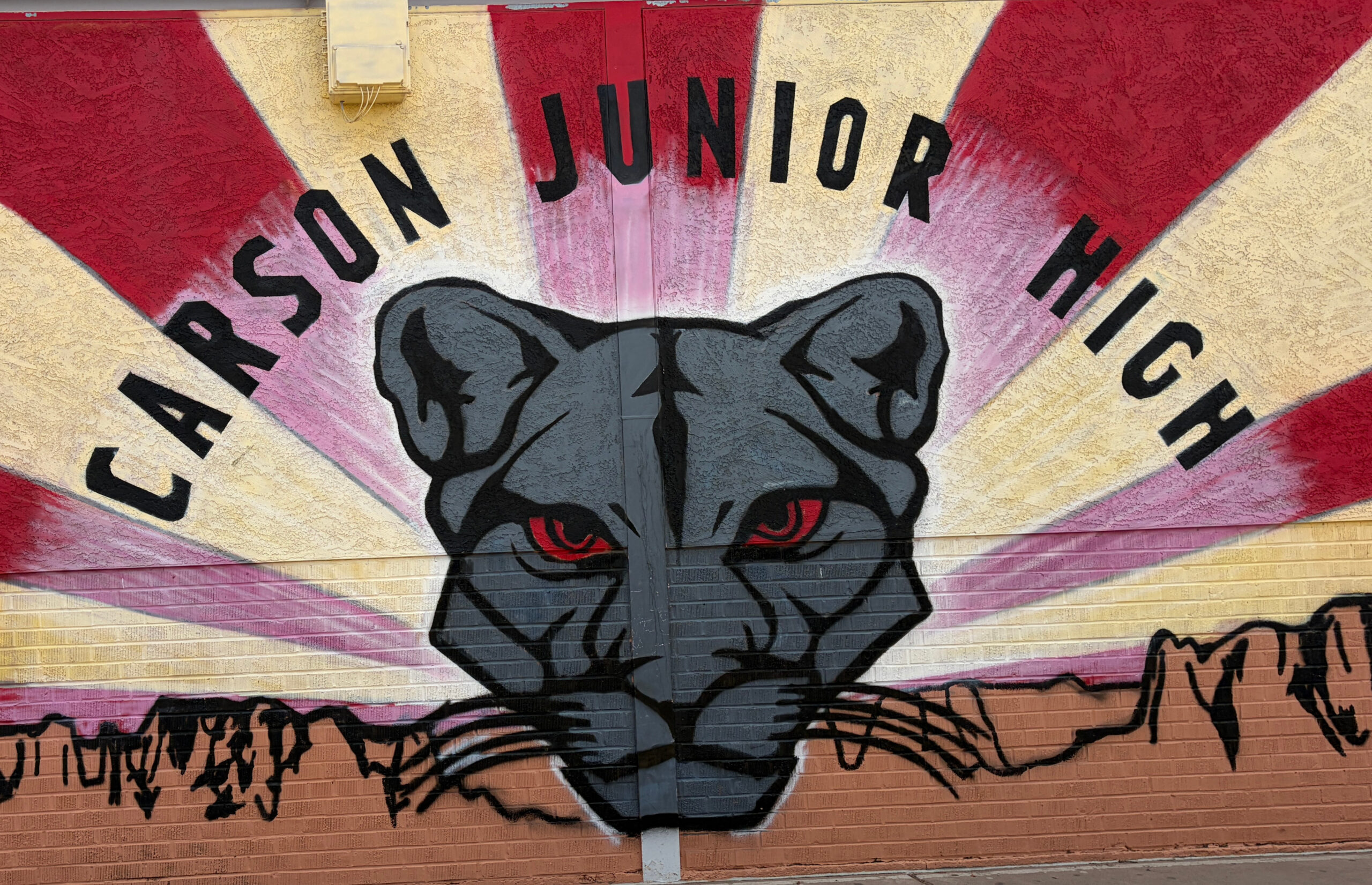
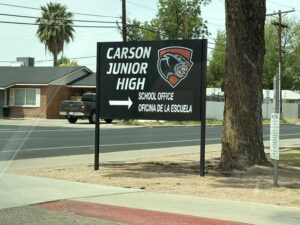
At Carson Junior High School in Mesa, these stories are all too familiar. Teachers and staff say they’re seeing more students and families struggling to meet basic needs, including putting food on the table. Oftentimes, a school’s role in the community extends far beyond a place for learning. For students, it provides a safe space and, for some, the most reliable access to nutritious meals, including free breakfast and lunches. But Ms. Gail Chastain wanted to make a more significant impact.
As a faculty member at Carson and a Mesa Public Schools alumna, Chastain has noticed that hunger often hinders learning. Students who came to school on an empty stomach struggled to concentrate in the classroom. And by Monday, the effects of a weekend without enough food are especially noticeable.
“They need that energy to get them through the day and to be able to focus on what’s going on in the classroom,” she remarked.
And in the past few years, these moments have become increasingly common.
“We have a lot of food insecurity right now,” shared Chastain. “It’s something that we all just need to step up to the plate and help those who need it. Everybody can do something.”
Recognizing the need and seeking a solution, Chastain and Principal Dr. Chris Brunst worked together to establish their on-campus food pantry. The resource students rely on today, however, started with very little. When Dr. Burnst was first appointed principal at Carson during the pantry’s early days, he was met with a reality that was hard to ignore: the shelves were scarce.
“When I first arrived here, we only had one can of beans to give out to families. You can’t make that up. That was the only thing we could offer.”
This realization became a lightbulb moment for Dr. Brunst and Chastain. Ultimately, their search led them to United Food Bank, where, in early 2025, Carson received their first food delivery. This first delivery marked a new chapter in Carson’s larger efforts to address food insecurity within their school community.
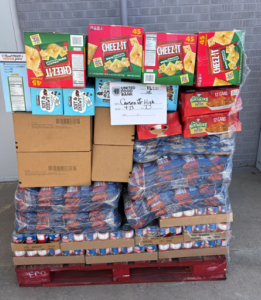 Today, Carson has gone from distributing one can of beans to nearly 120 snack bags per month. And this impact has made a tremendous difference in their students’ well-being. For one of their students, the pantry became a source of relief.
As the eldest sibling, he felt responsible for helping provide food for his family. Realizing that his family’s food assistance benefits were going to run out at the end of the month, he was caught taking food from the school’s pantry without permission. When he was caught, rather than punishing him, he was enrolled in the pantry program, ensuring he and his family could receive food for as long as they needed.
After several months of receiving consistent meals, the student’s grades and behavior dramatically changed. He was much happier.
“In the following weeks, he was much more lively, much more engaged in class, and we saw a drastic difference in him,” Dr. Brunst reflected. “We weren’t aware of just how much it was affecting him.”
As one of United Food Bank’s 25 school partner agencies, Carson receives monthly deliveries of snack bags filled with items such as canned ravioli, peanut butter granola bars and other easy-to-prepare foods for the kids. At the same time, the school also provides United Food Bank’s signature emergency food bags, packed with nutritious pantry staples like pasta and canned goods, perfect for the whole family.
The pantry and a partnership with United Food Bank represent more than just providing food. For Chastain, it is about removing one barrier that can prevent students from fully participating in their education.
“It helps our hearts to know that every day they can come here, they can have breakfast and lunch, but they can also have something at dinner and on the weekends,” remarked Chastain. “It’s not just one meal, it’s sustaining our kids and our families.”
What began with a single can of beans has grown into a resource that serves dozens of Carson families each month. Made possible through the generosity of the community and the support they receive from United Food Bank, the pantry continues to provide a sense of stability for families facing uncertainty.
But behind every snack bag distributed and every food item placed on the shelves is a student carrying a story that may never be fully visible. Dr. Brunst understands this. But he hopes those who donate understand that the support and love from the donors, volunteers, supporters, and the community truly makes a lasting impact.
“I think at the end of the day, sometimes they don’t get to see the faces that they impact, but they truly do impact people.”
Communications Specialist
ifleck@unitedfoodbank.org